
STRUCTURAL FOAM INJECTION MOLDING
WHAT IS STRUCTURAL FOAM INJECTION MOLDING?

Structural foam injection molding is a method of creating lightweight, durable plastic products. The process is cost-effective due to reduced material usage and the ability to create large, complex parts in a single molding cycle. The structural foam molding process includes the following steps:
- Thermoplastic resin pellets are mixed with a chemical blowing agent that creates gas bubbles within the plastic during the molding process and forms a foam structure inside the product
- The plastic resin and blowing agent mixture is heated until it melts into a viscous liquid
- The liquid is thoroughly mixed to ensure an even distribution of the blowing agent throughout the material
- The mixed material is injected into a mold, where the blowing agent expands and causes the plastic to fill the mold to create the shape of the product
- The mold is cooled using water or air, with the outer layers of the material creating a solid skin against the mold walls that surround the foamed core
- The cooled and solidified product is ejected from the mold to undergo finishing processes as necessary
Structural foam molding is a desirable plastics manufacturing process if you need to produce large, complex parts with excellent strength-to-weight ratios. It is popular for the production of:
- Storage containers
- Automotive parts
- Furniture components
- Recreational equipment
- Electrical enclosures
- Appliance housings
- Medical equipment
OUR STRUCTURAL FOAM & WEB CAPABILITIES
At Cooper Plastics, we are capable of producing both structural foam core and web core plastic products. This versatility is relatively rare in the industry and makes it possible to produce a wide range of plastic structural elements that are durable and cost-effective.
Parts that are made with the structural web process are solid with hollow channels and hollow thick sections packed out by internal injection of low-pressure nitrogen. Benefits of using the structural web process include:
- Smooth uniform surface finish with no swirl marks
- Reduced cycle times for very large parts
- 15-30% part weight reduction over solid parts
- Dual wall thickness with a high stiffness-to-weight ratio
- Elimination of sink marks opposite of ribs and thick wall sections
We can provide customized solutions to meet strength, weight, and materials specifications. Below is an overview of Cooper Plastics structural foam and web capabilities.
OUR MATERIALS
The structural molding process utilizes materials that yield lightweight yet durable products.
- HDPE is the primary material used by Cooper Plastics
Other structural foam materials that can be utilized include polypropylene (PP) and acrylonitrile butadiene styrene (ABS). These materials are known for their strength and impact resistance, making them ideal for components that require a balance of rigidity and reduced weight.
The material used in the structural foam process is critical to achieving the desired product properties and aesthetics. Selection is often based on application requirements such as chemical resistance, dimensional stability, or the ability to withstand environmental stress. One of the benefits of working with Cooper Plastics is that we have an experienced team that can provide recommendations to ensure the final product is cost-efficient and meets industry and application specifications.
OUR STRUCTURAL FOAM & WEB MACHINE
Structural foam molding machines are typically high-tonnage injection molding presses equipped with advanced controls and capabilities to manage the lower pressure required for the foaming process. The machines are designed to accommodate larger molds and produce consistent, high-quality components.
Key features often include multi-nozzle systems to ensure even distribution of material and foaming agents, as well as precise control over injection speeds, pressures, and temperatures. Advanced structural foam molding machines are also equipped with state-of-the-art monitoring systems that allow operators to fine-tune the process in real time.
The machine we utilize at Cooper Plastics is relatively unique in that it allows us to manufacture both structural foam and structural web products. This versatility enables our customers to get ultra-large plastic parts that wouldn’t be possible with other molding technologies.


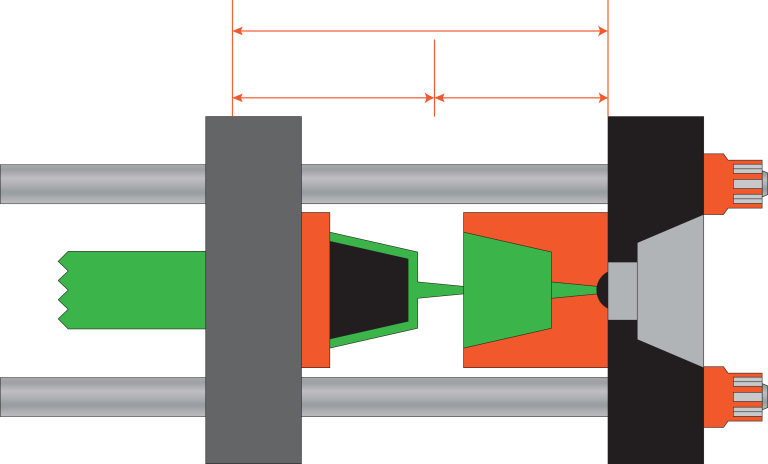
Get more details about our machine below.
- LP500S
– Clamp Tonnage 500
– Platen Size 89” x 98″ (2,262 x 2,489mm)
– Max. Clamp Opening (Daylight) 120″ (3,048mm)
– Max. Part Size 120 Lbs (54 kg); 58″ x 70″
VALUE ADDED SERVICES FOR YOUR PROJECT
At Cooper Plastics, we offer numerous other value-added services in addition to our structural foam molding service. These services include product development, finishing, assembly, and more. By offering these services, we elevate the experience for our customers and help them get the most out of our partnership.
HOW DOES STRUCTURAL FOAM INJECTION MOLDING WORK?
Structural foam injection molding is a unique manufacturing process that combines traditional injection molding with a foaming agent to create parts with a foamed core and solid outer skin. The process begins by heating thermoplastic material until it becomes molten. At this point, a foaming agent is introduced into the material, which will later cause the plastic to expand and form the characteristic foam structure. The molten, gas-infused material is then injected into a mold under lower pressure than in conventional injection molding. This lower pressure allows the foaming agent to expand within the mold cavity. When the material contacts the mold walls, the surface cells collapse. This results in a core of interconnected cells surrounded by outer layers that make up a smooth, dense, solid skin.
As the material cools, it solidifies into a lightweight yet rigid and strong structure. Companies can mold medium wall thickness or very thick wall sections based on need. This makes structural foam injection molding particularly advantageous for producing large, complex parts that need to be durable without being heavy. Additionally, the reduced pressure involved in the process allows for the use of larger molds and can lead to lower material costs, making it an efficient and cost-effective option for many industries.
HOW TO IDENTIFY QUALITY STRUCTURAL FOAM MOLDING COMPANIES
You must evaluate several factors to identify quality structural foam molding companies. A good place to start is with the level of expertise. Does the company have extensive experience with foam injection molding services? A dependable company will have a proven track record of producing structural foam parts with consistent quality and durability. This means knowing which materials and processes will yield the best results.
Another quality indicator is the company’s investment in advanced technology and equipment. The best structural foam molding companies like Cooper Plastics have state-of-the-art machines that offer precise control over the manufacturing process, resulting in product consistency and strict adherence to project specifications.
Consider the company’s capabilities to manufacture both structural foam and structural web products. That’s something you won’t find with every plastic manufacturer. Think about the company’s quality control and testing protocols as well. A company that takes quality control seriously is a company worth considering.
Finally, you never want to overlook customer service. Seek a plastics manufacturing partner that will work closely with you throughout the entire process, from initial design to final production. The company should offer guidance, support, and communication that will ensure a project that you are completely satisfied with.
HOW MUCH DOES STRUCTURAL FOAM INJECTION MOLDING COST?
The cost of structural foam injection molding varies based on many factors, including the type and complexity of the product, material used, project requirements, and production run size. There are additional services that can be added that increase costs. These services include finishing processes like drilling and assembly or various post-production testing services.
Seek transparency from the company you’re considering by requesting a detailed quote. Getting a breakdown of anticipated production costs will allow you to decide whether you want to proceed with the project, make adjustments and get a new quote, or drop the company from your consideration list and vet a different company.
Want to partner with Cooper Plastics for your structural foam injection molding needs? Request a free quote or contact us for more information.